Still life photography is a powerful and expressive genre that focuses on photographing inanimate objects in a controlled environment. Unlike portrait or street photography, still life allows the photographer complete creative freedom to shape the scene, control lighting, and convey a specific message or emotion through carefully arranged subjects.
This genre has deep roots in classical painting, where artists used everyday objects to symbolize time, beauty, mortality, and abundance. In modern photography, still life has evolved into a versatile discipline used in fine art, advertising, product photography, and editorial work.
What Is Still Life Photography?
Still life photography involves capturing non-living subjects such as food, flowers, tools, household objects, or manufactured products. The emphasis is not on the object itself, but on how it is presented. Composition, light, texture, and color play a crucial role in transforming ordinary items into compelling visual stories.
A successful still life photograph does more than show an object; it communicates mood, purpose, and meaning.
Professional Vancouver photographer capturing your most meaningful moments with artistic precision and natural light. Book your session today and turn your memories into timeless visual stories.
The Importance of Lighting in Still Life Photography
Lighting is the foundation of still life photography. Because the subject does not move, photographers can experiment extensively with light placement and intensity. Soft lighting is often preferred to create smooth transitions between highlights and shadows, while directional light can be used to emphasize texture and shape.
Natural window light is popular for artistic still life work, while studio lighting offers maximum control for commercial and product photography.
Key parameters in Still Life Photography
Composition and Arrangement
Composition is where creativity truly comes alive. The placement of objects within the frame determines how the viewer’s eye moves through the image. Principles such as the rule of thirds, leading lines, symmetry, and balance help create visually pleasing arrangements.
Minimalist compositions focus attention on a single object, while more complex setups can tell richer stories by combining multiple elements thoughtfully.
Backgrounds and Color Harmony
Choosing the right background is essential. Simple, neutral backgrounds prevent distractions and allow the subject to stand out. Color harmony between the subject, background, and props creates a unified visual experience.
Many photographers limit their color palette to two or three tones to maintain elegance and consistency.
How to Become a Commercial Photographer
Texture and Detail
Still life photography is ideal for showcasing texture and fine details. Materials such as wood, metal, glass, fabric, and ceramics respond differently to light. Side lighting is particularly effective for revealing surface texture and adding depth to the image.

Attention to detail, including cleanliness and surface quality, significantly impacts the final result.
Camera Settings and Equipment
A stable setup is essential. Tripods are widely used to ensure sharpness and precise framing. Low ISO settings help maintain image quality, while aperture choices control depth of field.
Shooting in RAW format provides flexibility in post-processing, allowing photographers to refine exposure, color balance, and contrast without compromising image quality.
Post-Processing and Editing
Editing is an extension of the creative process. Common adjustments include exposure correction, contrast enhancement, color grading, and minor retouching. The goal is to enhance the image while preserving realism.
Over-editing can distract from the subject and reduce the authenticity of the photograph.
Why Industrial Product Photography Boosts Sales in B2B Markets
Applications of Still Life Photography
Still life photography is widely used in:
- Fine art and gallery exhibitions
- Product and commercial photography
- Beverage and food photography
- Editorial and magazine content
- Branding and visual storytelling
Its versatility makes it one of the most valuable skills for both artistic and commercial photographers.
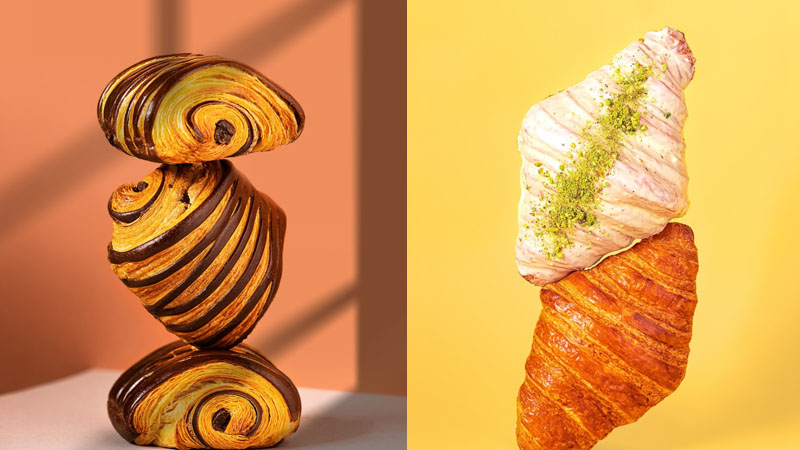
Tips for Still Life Photography
Here are the key tips for Still Life Photography in a professional, clear, and practical table:
| Topic | Key Point | Practical Explanation |
| Subject Selection | Choose a meaningful subject | Every object should serve a purpose in the composition |
| Lighting | Use soft, controlled light | Softboxes or window light create gentle shadows and depth |
| Light Direction | Side or angled lighting | Enhances texture, shape, and dimension |
| Background | Keep it simple and clean | Prevents distraction and keeps focus on the subject |
| Composition | Apply rule of thirds | Creates balance and visual interest |
| Color Harmony | Limit the color palette | Consistent tones make the image more cohesive |
| Texture | Highlight surface details | Side lighting reveals texture effectively |
| Depth of Field | Control intentionally | Use wide apertures for emphasis or narrow apertures for clarity |
| Tripod Use | Always recommended | Ensures sharpness and consistent framing |
| Lens Choice | Prime or macro lens | Captures fine details with high optical quality |
| Negative Space | Use thoughtfully | Adds minimalism and visual breathing room |
| Storytelling | Create visual meaning | Strong still life images communicate a concept or emotion |
| Reflection Control | Manage reflections carefully | Use flags, diffusers, or angle adjustments |
| Camera Settings | Keep ISO low | Maximizes image quality and reduces noise |
| Shoot in RAW | Highly recommended | Provides full control during post-processing |
| Post-Processing | Edit naturally and precisely | Enhance without making the image look artificial |
Product Photography: Studio or Real Location? Which One Delivers Better Results?
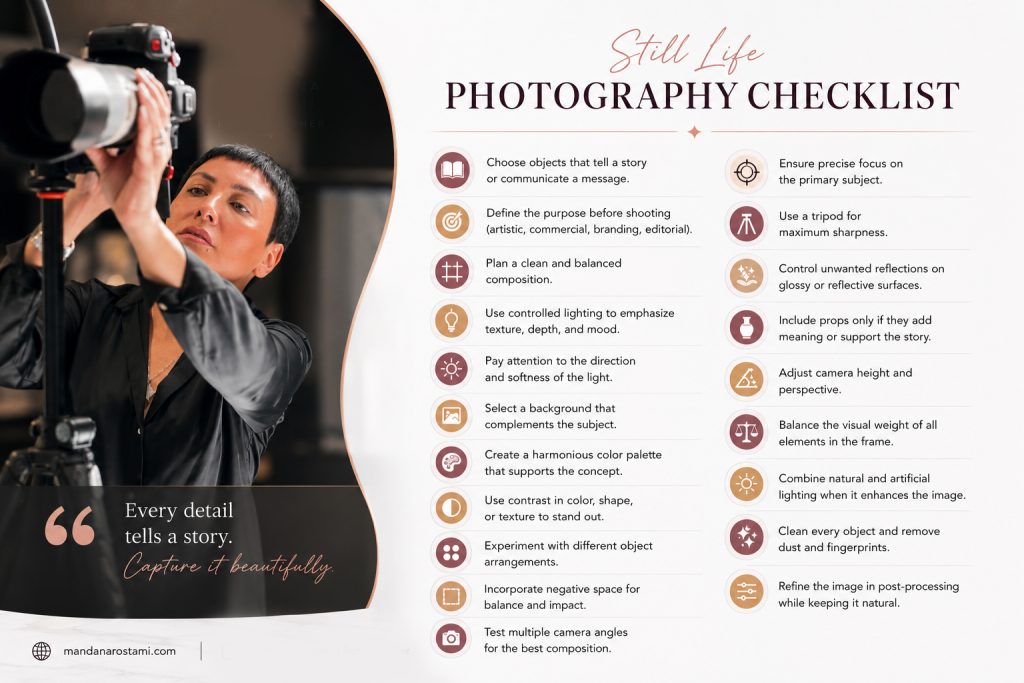
Still Life Photography Checklist
Conclusion
Still life photography is a thoughtful and rewarding genre that blends technical precision with artistic expression. By mastering light, composition, and detail, photographers can transform everyday objects into meaningful visual narratives. Whether used for art or commerce, still life photography remains a timeless and essential form of visual communication.(photographer north vancouver)