
Night photography is one of the most captivating forms of photography, allowing photographers to capture the beauty of artificial lights and the night sky. However, shooting in low light presents unique challenges that require proper camera settings, exposure techniques, and essential gear.
This comprehensive guide covers all the technical tips, gear recommendations, and creative techniques you need to master night photography and produce stunning images.
Choosing the Right Gear for Night Photography
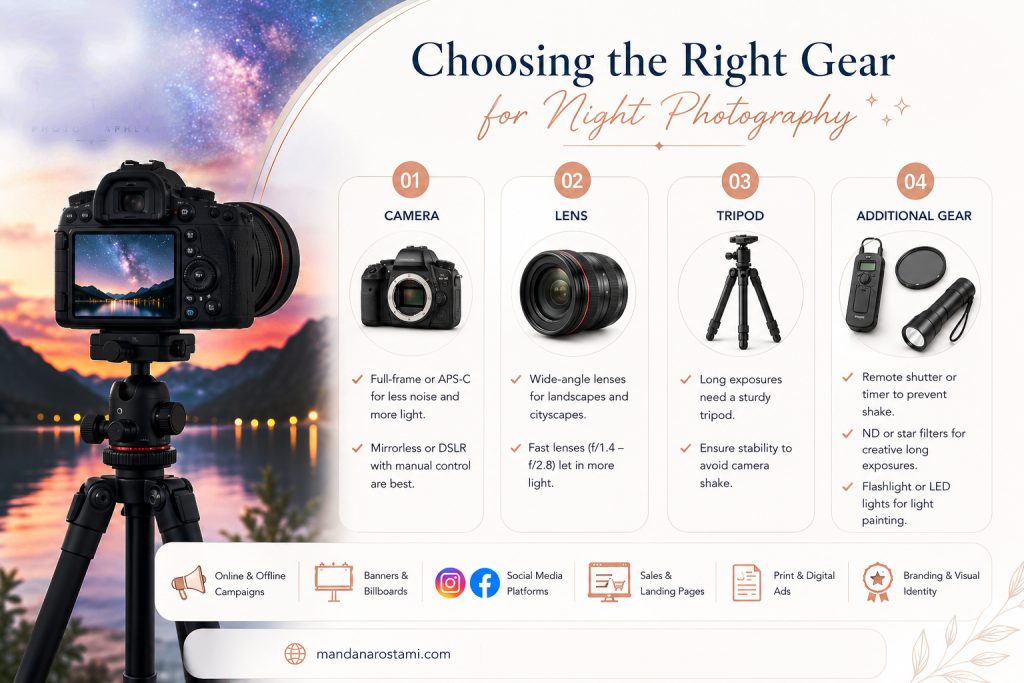
a) Camera
- A full-frame or APS-C camera is ideal for night photography due to its larger sensor, which produces less noise at high ISO and captures more light.
- Mirrorless or DSLR cameras with manual control are preferable.
b) Lens
- Wide-angle lenses are perfect for landscapes or cityscapes.
- Fast lenses (f/1.4 – f/2.8) help capture more light in dark conditions.
c) Tripod
- Night photography often requires long exposure, making a sturdy tripod essential.
- Ensure your tripod is stable enough to prevent camera shake.
d) Additional Gear
- Remote shutter release or timer to avoid camera shake.
- ND filters or star filters for creative long-exposure effects.
- Flashlight or portable LED lights for light painting.
Camera Settings for Night Photography
a) Exposure Settings
- Shutter Speed: Long exposures, typically 5 to 30 seconds or more, are needed to capture ambient light and stars.
- Aperture: Usually set between f/2.8 to f/8, depending on the desired depth of field.
- ISO: ISO between 800–3200 balances brightness and noise.
Industrial vs. Advertising Photography: Key Differences Explained
b) Focus
- Autofocus often struggles in low light, so manual focus is recommended.
- For landscapes, focus on infinity (∞) or a distant bright object.
c) White Balance
- Set manually between 3200K–4500K for natural-looking city lights.
d) Night Photography Settings Table: Canon / Nikon / Sony
| Scene / Subject | Shutter Speed | Aperture | ISO | Lens Recommendation | Practical Tips |
| City Streets / Light Trails | 10–30 sec | f/8 | 800–1600 | Wide-angle (16–35mm) | Use a tripod and remote release. Capture moving car lights as streaks. |
| Urban Night Buildings | 5–15 sec | f/5.6–f/8 | 800–1600 | 24–70mm | Stabilize camera, adjust white balance to 3200–4000K for natural colors. |
| Star Trails / Astrophotography | 30 sec – several minutes | f/2.8–f/4 | 800–3200 | Wide-angle (14–24mm) | Use manual focus to infinity. Stack multiple exposures for noise reduction. |
| Moon Photography | 1/125–1/250 sec | f/8–f/11 | 100–400 | Telephoto (200–400mm) | Lower ISO to avoid noise, use tripod, avoid too long exposure to prevent blur. |
| Light Painting / Creative Effects | 10–60 sec | f/4–f/8 | 400–800 | Wide-angle (14–35mm) | Move LED/flashlight to illuminate objects; experiment with shutter length for effect. |
| Night Landscapes | 15–30 sec | f/4–f/8 | 800–1600 | Wide-angle | Compose with foreground interest; use low ISO to reduce noise. |
| Industrial / Architecture Night Shots | 5–20 sec | f/5.6–f/11 | 400–800 | 24–70mm | Highlight structures with ambient lights; adjust white balance for consistency. |
Still Life Photography: The Art of Capturing Objects with Meaning
Exposure Techniques in Night Photography
a) Long Exposure
- Capture moving lights from cars, stars, or water to create dynamic streaks and motion effects.
- Examples: light trails on urban streets, star trails in the night sky.
b) Light Painting
- Use flashlights or LED lights to illuminate objects in darkness, creating artistic effects.
c) Image Stacking
- Combine multiple short exposures to reduce noise and improve image quality, especially for astrophotography.Vancouver photographer
d) Using Ambient Light
- Streetlights, building lights, and natural light sources can enhance composition and add depth to your images.
Practical Tips for Successful Night Photography
- Scout your location beforehand: Safety, accessibility, and light sources matter.
- Carry spare batteries: Long exposures drain batteries quickly.
- Keep your lens clean: Dew and dust can scatter light and reduce clarity.
- Use a timer or remote release: Prevents camera shake when pressing the shutter.
- Experiment with settings: Adjust shutter speed, aperture, and ISO to achieve the desired effect.
Creative Applications and Ideas
- Urban Night Photography: Buildings, streets, and light trails.(photographer north vancouver)
- Night Landscapes: Starry skies, the moon, and natural ambient light.
- Industrial and Commercial Night Photography: Machinery or architecture illuminated creatively.
- Creative Projects: Combining long exposure and light painting to produce unique visual effects.
Conclusion
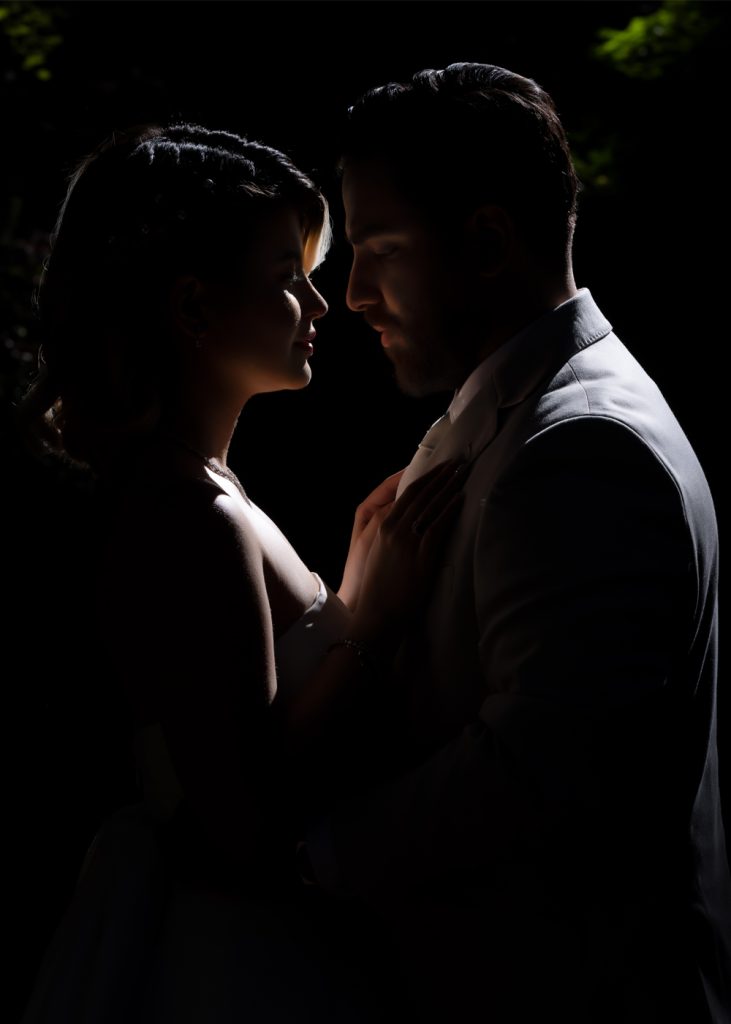
Night photography combines creativity, patience, and technical skill. By selecting the right gear, mastering exposure techniques, and applying creative lighting methods, you can capture breathtaking images even in low light.
With practice and attention to settings, equipment, and composition, night photography can elevate your portfolio and produce stunning images for social media, blogs, or commercial projects.


















4 Responses
Hi Mandana 👋
I came across your night photography work and the shots you captured are absolutely amazing. I really love your use of light and composition
I was wondering how I can book a photography session with you. Could you please let me know the process, availability, and pricing?
Thank you so much, and I look forward to hearing from you 😊
Best regards,
Dan
Hi Dan
Thank you so much for your kind words! I’m really happy you enjoyed my night photography work — I truly appreciate you taking the time to share that.
I’d be glad to help you book a photography session. To get started, please send me a direct message or contact me through my website with a few details about your project (type of shoot, location, and preferred date). Once I have that, I can check my availability and share the pricing options with you.
Looking forward to hearing more about your ideas and hopefully working together
Best regards,
Mandana
I came across your out-of-studio photography and just wanted to say how interesting and professional your work is. The outdoor shots you captured are truly impressive.
Thank you so much for your kind words
I’m really glad you found my out-of-studio work interesting and professional. It means a lot to hear that the outdoor shots stood out to you.
I truly appreciate your support